


Guy Fawkes, Lewes & the US War of independence
Remember, remember!
The fifth of November,
The Gunpowder treason and plot;
I know of no reason
Why the Gunpowder treason
Should ever be forgot!
This is part of the famous english folk verse written in 1870 to commemorate the 5th November, Bonfire or Guy Fawkes night. A British celebration which appears to be rapidly fading away.
I have many fond early memories of family bonfire parties. Then later on in my adult years whilst living in East Sussex, attending the huge infamous Lewes bonfire night, which was always an annual favourite of mine and people i knew.
UK Councils around Britain are gradually cancelling large organised community fireworks, many of the traditions of burning a guy in the fire have drifted away.
An americanised Halloween is progressively being pushed on everyone more and more, the remnants of the original ancestral Samhain is but a distant memory.
Halloween is obviously so easily commercialised for profit this is huge component to its continuing global adoption. But is there a deeper, darker reasoning behind its global ascendance? Halloween brings about a celebration of sugary sweets, combined with twisted forms horror and death. It all conveniently feels in lockstep with the global dark occult driven forces that are continuing to encircle us.
The Guy Fawkes plot in the opinion of some scholars has all the evidence of a potential early false flag operation. Many aspects of the narrative fail to add up. The event energy harbours stories of rebellion, and refusing to be governed by elite groups. A story as old as time, and still incredibly relevant to this day.
But more extraordinary to me, is that it has clear verifiable links to the formation of the United States through the resulting revolutionary war.
Visually globally the symbolism of Guy Fawkes is well know in part due the Anonymous hacking group, which itself was inspired by the ‘V for Vendetta’ a graphic novel by Alan Moore and David Lloyd, which was eventually made into a 2005 Hollywood film, staring Natalie Portman.
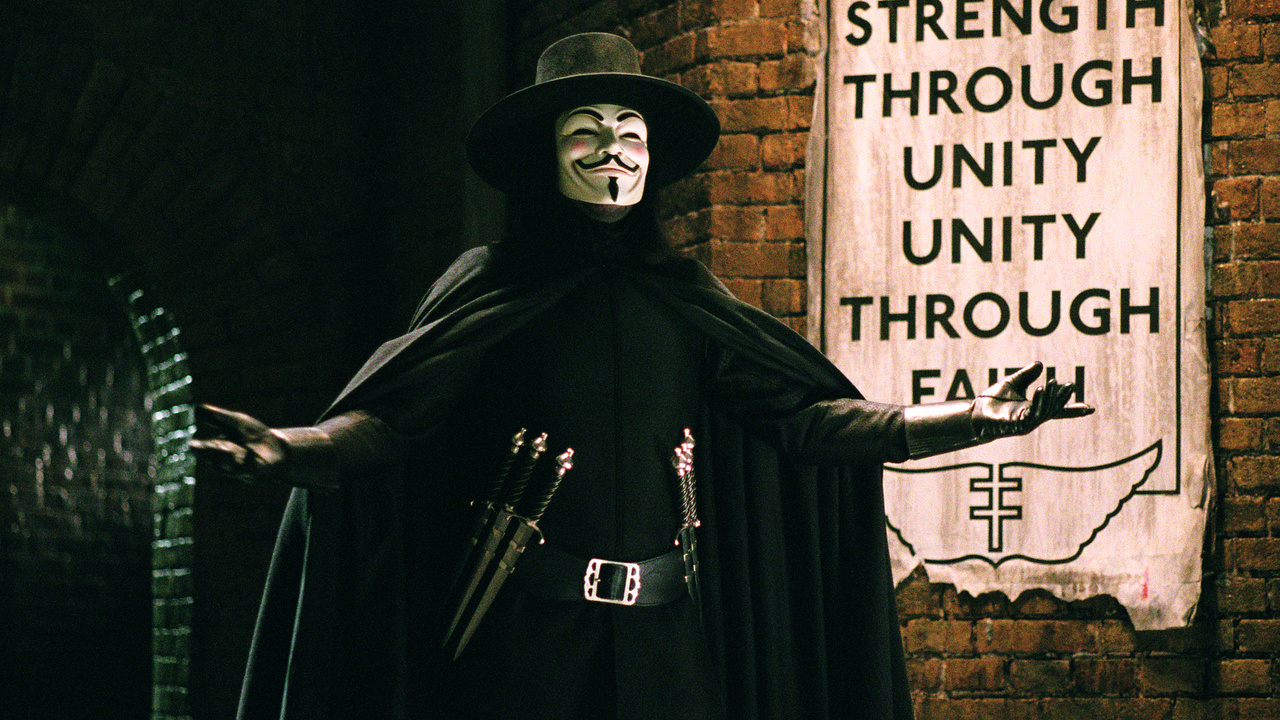
Its creators again turning the narrative on its head reframing Guy Fawkes as a folk hero fighting against tyranny. This is a common theme with Guy Fawkes, it has a sophisticated ability to morph and evolve acting as a powerful subconscious archetype to fit the times around it.
The officially agreed narrative described the Guy Fawkes saga as a Catholic conspiracy. This group of catholic terroists were actually led by Robert Catesby. Guy Fawkes was part of this group, he was born in 1570 in York, and was a Catholic convert that went on to fight in Spain against protestant forces.
Upon moving back to England in 1605 Fawkes eventually joined Catesby as the key explosives expert due to his war time skills. The main intention of the conspiracy was to assassinate King James the 1st, blowup parliament and kill the protestant aristocracy. The terrorist act would then path the way towards a hostile Catholic uprising.
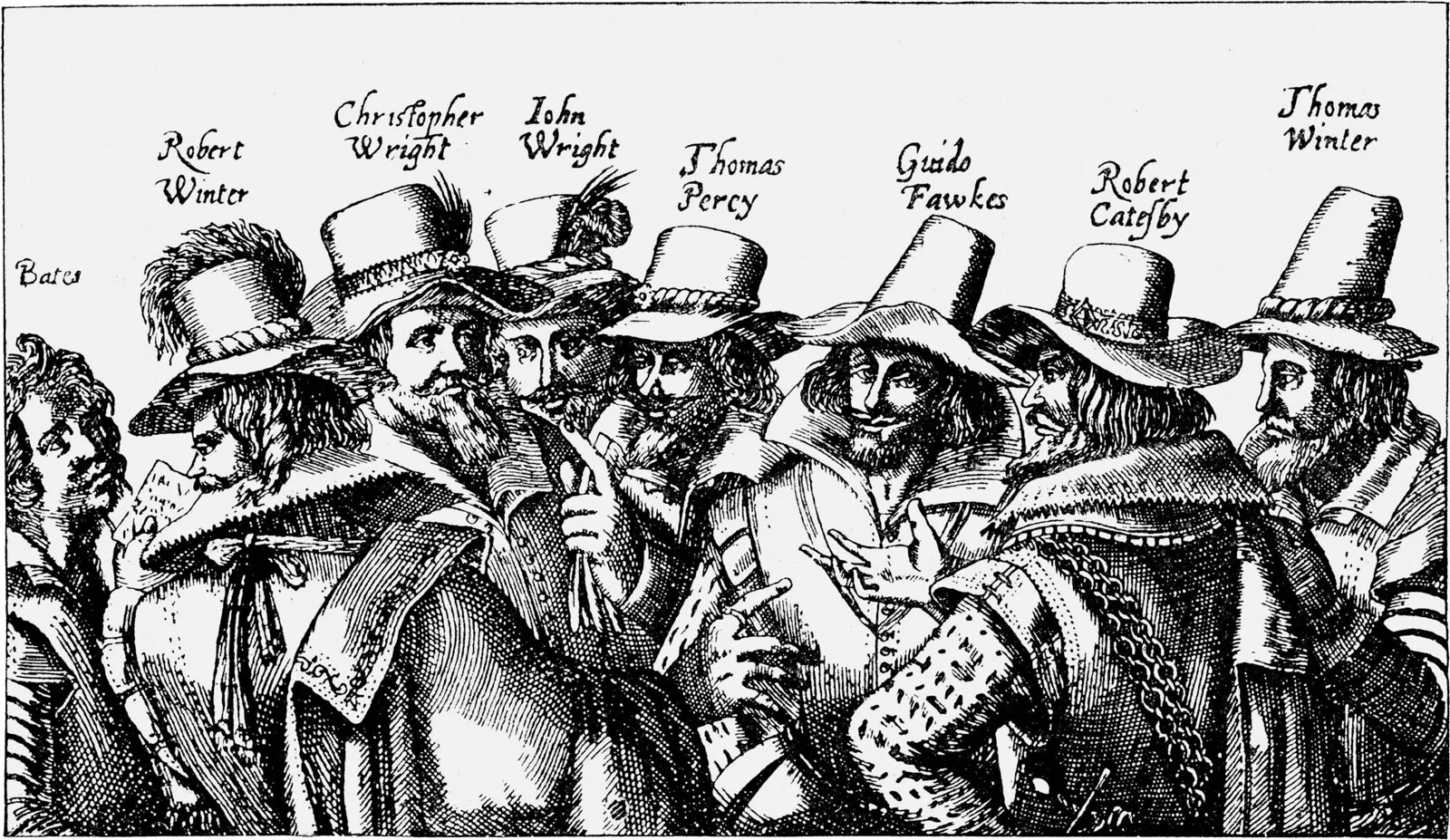
But at the last minute, the plot was foiled. The 36 barrels of gunpowder were discovered underneath parliament. This led to arrest and the eventual grisly demise of the catholic traitors.
The groups confessions were forged through torture. Then after being unanimously found guilty in court, eventually all were hung, drawn and quartered. A powerful violent end to send a message to other individuals thinking about revolution.
The plot was intercepted after an anonymous warning letter was sent to a Catholic lord, advising him to stay away from parliament on the 5th November.
For centuries, even throughout my childhood on the 5th November we would construct a Guy using old clothing and stuffing. Build a bonfire and enjoy fireworks and share food with the wider community. Even in my lifetime i’ve seen this celebration dramatically fade away.
In the previous era of Google creating daily updated illustrations to represent its logo. Bonfire night was represented once and largely ignored every other year. It’s always felt like this story was being purposefully forgotten.

I feel now I might have more context to why its disappearing, and actually what this strange event now represents in the modern era.
In my humble opinion it’s not religious hatred or intolerance. It hasn’t been for a while, but it very much seems to activate rebellious archetypes within people.
Controlled narrative
There has been much material written casting doubt on the official story. A book written in 1897 by a Jesuit priest and historian by the name John Gerald who began routine research into the plot for an upcoming lecture. But upon exploring some of the original manuscripts, evidence, documentation and aural accounts the official narrative started to look very unreliable and detailed huge inconstancies.
Through his extensive scrutinising of all the information Gerald came to the conclusion that many inconstancies, fabrications and outright manipulations were by the government at the time. Particularly by one of the key players Robert Cecil. The Earl of Salisbury.
Cecil is reported to have had one of Europe’s most extensive spy network. In a letter he wrote 2 weeks before the very plot occurred. He stated the following – “I spend my time in sowing so much seed as my poor wretched fingers can scatter, in such a season as may bring forth a plentiful harvest”
Eventually Gerald found the information he uncovered so compelling his research would later turn into a book called ‘What was the Gunpowder Plot’ published in 1897. Within this book Gerald presents a very compelling case stating that the Guy Fawkes narrative was very much manipulated for political ends and to possibly incriminate various Catholic protests. And further consolidate power amongst certain individuals.
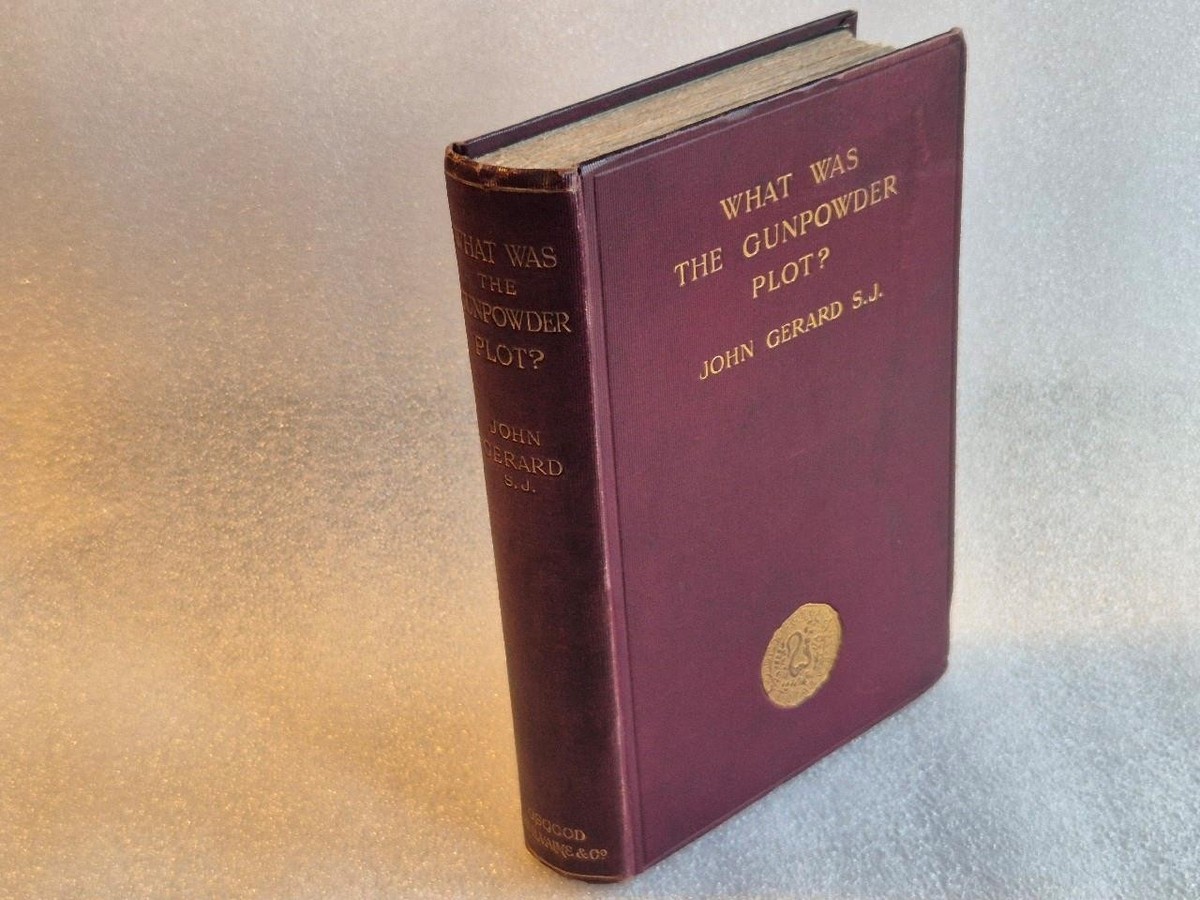
He argued that the government had extensive intelligence on Catholic activities, and knew about the plot long before its discovery. To me this is already giving strong October 7th vibes in relation to Israel.
The famous intercepted letter that enabled the foiling of the supposed plot, was received by Cecil. But he delayed action and feigned ignorance to engineer a situation for the King to dramatically discover it at the most critical time.
The aspect of Guy Fawkes story and the installing of 36 barrels of gunpowder claiming it came through a secret tunnel was a fabrication in Gerald’s eyes. Fawkes could have very easily gained access through a normal back door.
Confessions of the captors were manipulated under torture to fit the official narrative. Some signed confessions were forged when suspects were already dead. It’s stated that Cecil allegedly even employed people to counter-fit certain individuals handwriting.
When the criminal proceedings finally went to trial, key evidence was suppressed from public view.
The conspirators allegedly rented a house near parliament to store a large consignment of gunpowder, and mined a tunnel from the house to parliament building. But according to Gerald’s research there was no evidence of gunpowder at the property, and even no secretly mined tunnel system. Its also of note that none of the people involved in the plot had any mining experience.
Gunpowder was tightly controlled by the government, so questions arise how did they actually acquire 2.5 tonnes of gunpowder without detection from authorities.
One huge aspect to the story is the that Guy Fawkes wasn’t even the mastermind or leader he was merely a solider or patsy for the entire narrative. This is just a small selection of inconstancies with the story in John Geralds book.
Revolutionary War
The gunpowder plot astonishingly went on to heavily influence American politics and burgeoning revolutionary ideas.
In New England especially, people would celebrate ‘Popes day’ or ‘Popes night’ and it was a significant annual celebration.
Colonists similar to Britain would burn effigies sometime of Guy Fawkes but mainly ‘The Pope’ or even ‘The Devil’ along with topical political enemies of the time.

The celebrations were violent and would descend into riots. The colonists inherited the fears concerning Catholic powers and that Catholicism would be imposed through force bringing tyranny and loss of liberties to their land.
George Washington was appalled with the celebrations due to trying to make alliances with France to fight the revolutionary war, in the end he banned the celebrations. The day was a huge paradox. On one hand the celebrations involved being against British rule. Yet to achieve independence, they were required to stamp out all anti-catholic feeling for various alliances.
Many Americans are probably unaware how anti-catholic revolutionary rhetoric was in the beginning. And it goes to show how powerful maybe this movement was in creating revolutionary change, which could feed into why this celebration taps into something, in the human psyche of rebellion, regardless of cause. It’s definitely something that certain powers would rather keep quelled and suppressed at all costs.
But some of the chants traditions during this era of American revolution are still carried out to this day in Sussex in the small town Lewes. This town is inextricably linked to revolution and rebellious thoughts and ideas, that directly influenced the war on independence.
Lewes
Lewes is a small town in my former county of East Sussex. Referencing the earth energies of this area is important, over the centuries I feel it has harboured and inspired a culture of counter revolutionary ideas and creativity that still tentatively exists to this very day. Republicanism and resistance to authority dates way back since the 17th century.
The towns motto is ‘We wunt be druv’ or (we won’t be driven or controlled). The ancient Sussex county has a long history of pheasant revolts. Traditionally its people were a lot freer from the wrath of the land owners compared to other counties in Britain at the time. Due to their rebellious spirit.
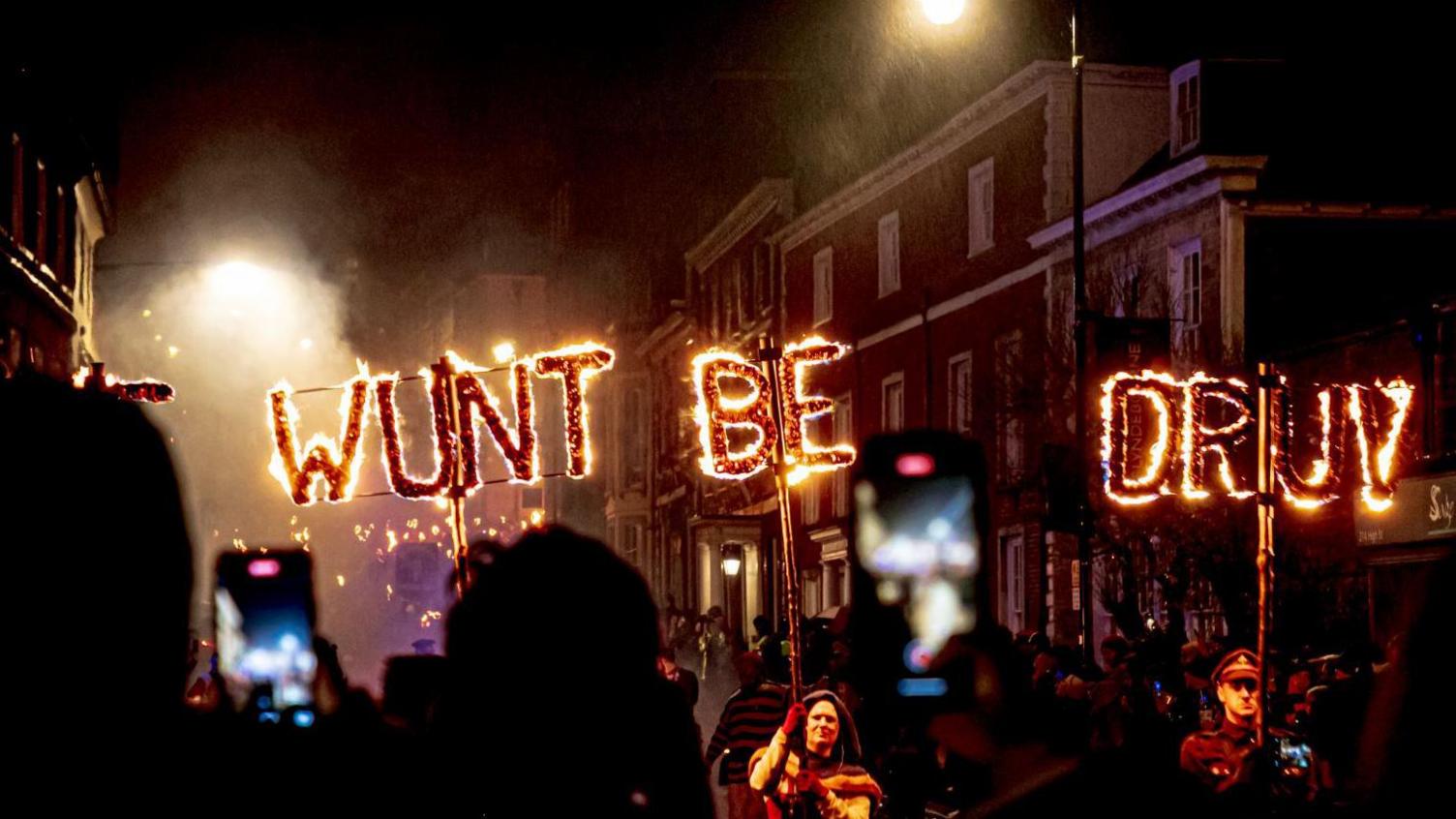
To this day Lewes has a huge bonfire tradition. Which closes the entire town for the day, various bonfire associations parade through town in costumes. Each association then has its own fireworks display towards the end of the evening.
It is again a night of huge contradictions, they burn huge effigies of the pope, topical geo-political and locally demonised figures of the time, and of course Guy Fawkes himself.
The event has morphed into not being anti-catholic or anti-religion, although the chants the effigies are there. It is more a general anti-establishment event. There are elements that are influenced by modern mainstream thinking, it does play into the global theatrics of politics, rather in my opinion getting to the route of the true manipulators, moving beyond these literal puppets.
During the time of the Catholic Queen Mary. 17 protestant martyrs were burned, 10 simultaneously at once. To this day 17 burning crosses are carried through town to commemorate them. To American eyes the significance of burning crosses would be very jarring.
Thomas Paine, one of the leading writers and thinkers in the United States lived in Lewes from 1768 – 1774 he worked as a tax collector for Duke of Richmond. Paine became radically involved in the towns political culture. He was an active and intrinsic member to ‘The Headstrong Club’. A debating society for radicals and intellectuals at the White Hart Inn, which is still there to this day and has been described as ‘The Cradle of American Independence’
The Duke of Richmond was known as ‘The Radical Duke’ he was a fierce supporter of American patriots and wanted the active withdrawal of British forces, along with granting the vote to normal people beyond landowners and aristocrats.
After Paine wrote a pamphlet on political corruption in government he was fired. Went bankrupt and eventually separated from his wife. He went onto meet Benjamin Franklin in London who encouraged him to move to United States and to seek his fortune there
Thomas Paine would then go onto write ‘Common Sense’ the most widely circulated document during the revolution, laying the foundations for America we see today.
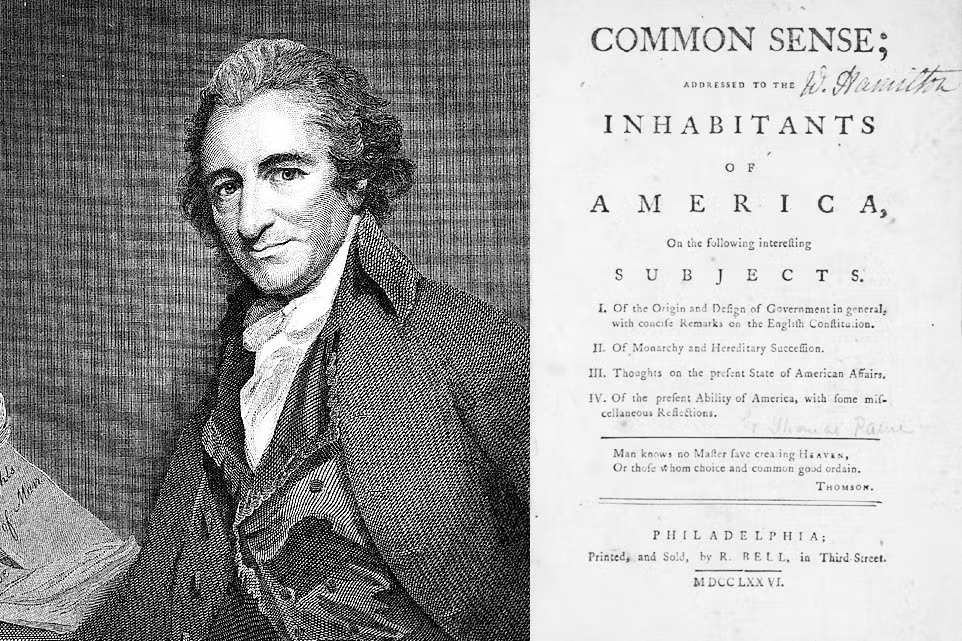
More importantly Thomas Paine acted as a courier of revolutionary thought, and even physical written documentation linking France, England and America. Because of this, there is a surviving American Declaration of Independence in Chichester, Sussex which belonged to the Duke of Richmond. This document was known as the ‘Sussex Declaration’. It very likely passed through Lewes, Paine’s former home.
This anti-establishment feeling has run deep for many centuries. The rebellion continued on in a different forms. The towns ‘Bonfire Boys’ originally formed from disenfranchised soldiers, stemming from Napoleonic wars who would wear captured war trophies of French Mariniere striped jumpers.
The smuggler style costume dominates bonfire proceedings to this day. They carry burning barrels of hot tar and fire crackers through the town. It is potent visceral sight.
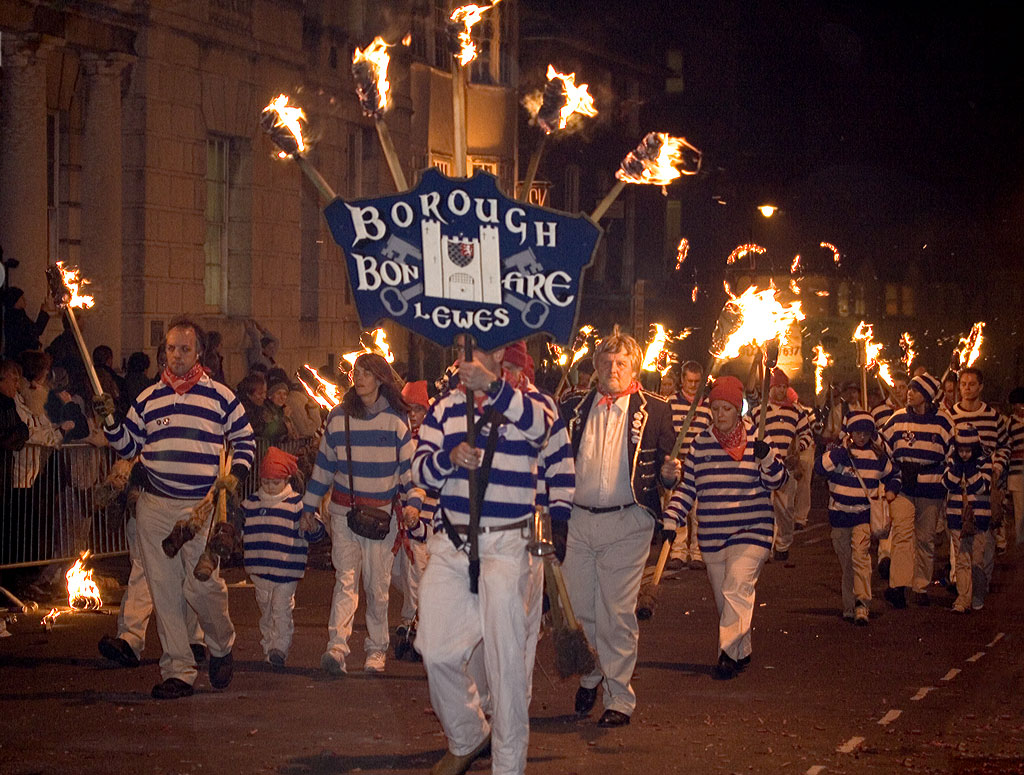
The boys became a deep concern to authorities because it was a very powerful working class rebellion. In the early days many didn’t care if they lived or died. The Bonfire Boys would be so riotous even the London Metropolitan police would be called to quell the riots.
5th November for the working class people of Lewes became a class struggle against the landed gentry and the industrialists. Although I can’t help but note, maybe that this working class contingent has largely disappeared from todays proceedings, priced out of the largely affluent area.
Conclusion
For me all of these ideas of revolution, the source of all of this, lay in the earth energies of Lewes and Sussex at large. These energies would arguably go onto influence the entire world playing its small part in the formation of the United States.
Which is an incredibly powerful thought.
Yes there are questions about the formation of United States and Masonic secret society influence. Some of the key characters even people i mentioned here, had connections to this organisation. So it is definitely an avenue of further research.
The anti-establishment, anti-authoritarian, populist resistance against elite control has its seeds in the Guy Fawkes story. Even though the event seems to be a complete fabrication by the government at the time, it has inadvertently really tapped into deep revolutionary ideas within the human psyche and subconscious, and morphed and changed through the centuries.
Everyone of course should be free to practice their own religion, and I don’t advocate violence in anyway. But I think there is something powerful in the energies of this movement, in its DNA. Which went onto influence ‘V for Vendetta’ and ‘Anonymous’. It spans from the physical to the digital space and various internet sub-cultures of anons and even 4-Chan.
I can now see why certain controlling forces wouldn’t want people to celebrate and or know the true history. They want you to focus on the sugary coated sweets, and the demonic inspired commercialised Halloween costumes.
So remember remember the 5th of November, became ‘We Wunt be Druv’ to ‘Don’t Tread on Me’. A movement and energy that crossed the Atlantic ocean. A struggle for freedom and liberty that still plays out to this day.
Remember, remember!
The fifth of November,
The Gunpowder treason and plot;
I know of no reason
Why the Gunpowder treason
Should ever be forgot!
Guy Fawkes and his companions
Did the scheme contrive,
To blow the King and Parliament
All up alive.
Threescore barrels, laid below,
To prove old England’s overthrow.
But, by God’s providence, him they catch,
With a dark lantern, lighting a match!
A stick and a stake
For King James’s sake!
If you won’t give me one,
I’ll take two,
The better for me,
And the worse for you.
A rope, a rope, to hang the Pope,
A penn’orth of cheese to choke him,
A pint of beer to wash it down,
And a jolly good fire to burn him.
Holloa, boys! holloa, boys! make the bells ring!
Holloa, boys! holloa boys! God save the King!
Hip, hip, hooor-r-r-ray!

Leave a Reply